The Moon: Earth's Companion and Gateway to the Cosmos
The Moon is Earth's only natural satellite and the largest moon relative to its planet in the solar system. Its presence has shaped Earth in profound ways: stabilizing Earth's axial tilt, creating tides, and possibly playing a role in the origin of life. The Moon's synchronous rotation means we only ever see one face from Earth, but the far side, first imaged by the Soviet Luna 3 mission in 1959, revealed a dramatically different landscape. The Moon's surface tells a story of violent impacts, ancient volcanism, and billions of years of geological history preserved in the absence of weather or plate tectonics. The Apollo missions (1969-1972) remain humanity's greatest achievement in space exploration, landing 12 astronauts on the Moon and returning 382 kg of lunar samples that continue to be studied today. These samples revealed that the Moon formed from a giant impact early in Earth's history, when a Mars-sized object collided with the young Earth, ejecting material that coalesced into the Moon. Today, the Moon is the target of a new era of exploration, with multiple nations planning missions to establish permanent bases and use the Moon as a stepping stone to Mars and beyond. This article explores the Moon's formation, geology, exploration history, and its role in Earth's past and humanity's future.
In Simple Terms
The Moon is Earth's constant companion in space—it's always there, lighting up the night sky and creating the tides in our oceans. What's really cool is that the Moon always shows us the same face (we never see the "dark side" from Earth), but when spacecraft finally got around to the other side, they found it looks completely different—much more cratered and rough. The Moon is like a giant history book—because it has no atmosphere or weather, all the craters and features from billions of years ago are still there, perfectly preserved. Scientists think the Moon formed when something the size of Mars crashed into the young Earth billions of years ago, blasting material into space that eventually came together to form the Moon. The Moon does amazing things for Earth—it stabilizes our planet's tilt (which keeps our seasons stable), creates the tides (which have shaped life in the oceans), and might have even helped life get started. The Apollo missions in the 1960s and 1970s were the first and only time humans have visited another world, and the rocks they brought back are still teaching us new things today. Now, countries around the world are planning to go back to the Moon, this time to stay, and use it as a stepping stone to explore Mars and beyond!
Abstract
The Moon orbits Earth at an average distance of 384,400 km, with a radius of 1,737 km and a mass of 7.34 × 10²² kg. The Moon's synchronous rotation means it rotates once for every orbit, keeping the same face toward Earth. The lunar surface is divided into two main terrains: the bright, heavily cratered highlands (covering 83% of the surface) and the dark, smooth maria (covering 17%), which are ancient lava flows. The Moon has no atmosphere, no magnetic field, and experiences extreme temperature variations from 127°C during the day to -173°C at night. The Moon's geology is dominated by impact craters, with the largest being the South Pole-Aitken Basin, 2,500 km in diameter. The Moon formed approximately 4.5 billion years ago from debris ejected when a Mars-sized object collided with the young Earth, a theory supported by the similarity of oxygen isotopes between Earth and Moon and the Moon's low iron content. The Apollo missions provided the first and only human visits to another world, with 12 astronauts walking on the Moon between 1969 and 1972. Recent missions have discovered water ice in permanently shadowed craters near the poles, making the Moon a potential resource for future exploration. The Moon continues to be a target for exploration, with NASA's Artemis program planning to return humans to the Moon and establish a sustainable presence. This article reviews the Moon's formation, geology, exploration history, and future prospects.
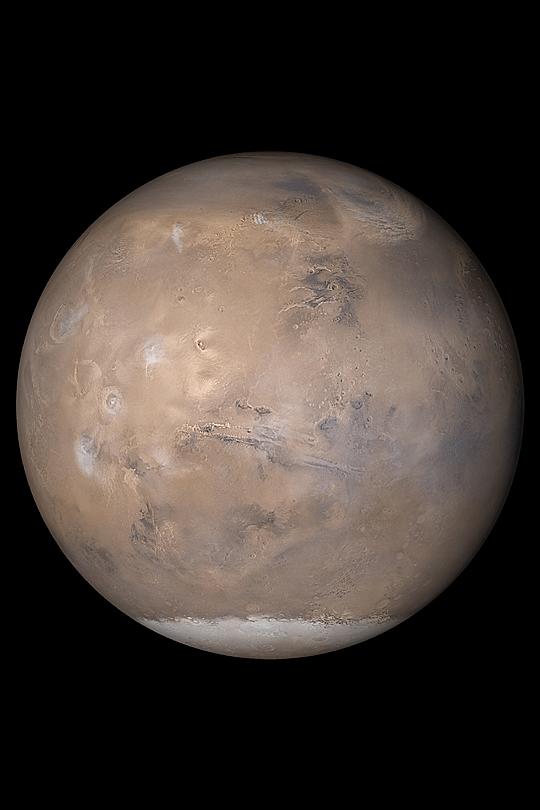
 The Moon as seen from Earth, showing its heavily cratered surface. Credit: NASA (Public Domain)
Introduction
The Moon has been humanity's constant companion for billions of years, influencing our culture, science, and understanding of the cosmos. It's the only celestial body humans have visited, and the Apollo missions remain one of humanity's greatest achievements. But the Moon is more than a destination—it's a time capsule preserving the early history of the solar system, a laboratory for understanding planetary formation, and a stepping stone to the rest of the solar system.
The Moon's influence on Earth is profound. Its gravity creates tides that have shaped coastlines and may have played a role in the origin of life. The Moon stabilizes Earth's axial tilt, preventing chaotic climate variations. Without the Moon, Earth's tilt could vary dramatically, making the planet less habitable.
Understanding the Moon is essential for understanding Earth. The Moon's surface, unchanged for billions of years except by impacts, preserves a record of the early solar system that has been erased on Earth by plate tectonics, weather, and life. The Apollo samples continue to reveal new insights about the Moon's formation, Earth's early history, and the processes that shaped the inner solar system.
Physical Characteristics
Basic Properties
The Moon is the fifth-largest moon in the solar system:
- Radius: 1,737 km (0.27 Earth radii)
- Mass: 7.34 × 10²² kg (0.0123 Earth masses)
- Density: 3.34 g/cm³ (less dense than Earth, indicating less iron)
- Surface gravity: 1.62 m/s² (0.165 times Earth's gravity)
- Escape velocity: 2.38 km/s
The Moon's low density compared to Earth supports the giant impact theory of formation, as the Moon would have formed from Earth's mantle material, which is less dense than the core.
Orbit and Rotation
The Moon's orbit and rotation are synchronized:
- Semi-major axis: 384,400 km (varies from 356,400 to 406,700 km)
- Orbital period: 27.3 days (sidereal month)
- Synodic period: 29.5 days (time between full moons)
- Rotation period: 27.3 days (synchronous with orbit)
- Orbital inclination: 5.1 degrees to Earth's equator
The synchronous rotation means the Moon always shows the same face to Earth, though libration (wobbling) allows us to see about 59% of the surface over time.
Tidal Locking
The Moon is tidally locked to Earth:
- Cause: Earth's gravity created a tidal bulge on the Moon
- Effect: The bulge was pulled ahead of the Moon's rotation, slowing it until rotation matched orbital period
- Result: Same face always toward Earth
Tidal locking is common for moons and occurs when the orbital period matches the rotation period.
Formation: The Giant Impact Theory
The Collision
The Moon likely formed from a giant impact:
- Timing: ~4.5 billion years ago, shortly after Earth formed
- Impactor: Mars-sized object (Theia) collided with young Earth
- Angle: Oblique impact, not head-on
- Result: Material from both Earth and Theia ejected into orbit
The impact would have been catastrophic:
- Earth's surface melted
- Atmosphere vaporized
- Debris formed a ring around Earth
- Ring material coalesced into the Moon
Evidence
Multiple lines of evidence support the giant impact theory:
- Oxygen isotopes: Moon and Earth have identical oxygen isotope ratios, suggesting they formed from the same material
- Low iron: Moon has less iron than Earth, consistent with forming from mantle material
- Angular momentum: Earth-Moon system has high angular momentum, consistent with an impact
- Lunar samples: Apollo samples show the Moon was once molten (magma ocean)
- Computer simulations: Models show a giant impact can create a Moon-sized object
Alternative Theories
Other theories have been proposed but are less supported:
- Co-accretion: Moon formed alongside Earth (doesn't explain low iron)
- Capture: Moon formed elsewhere and was captured (doesn't explain similar composition)
- Fission: Moon split from Earth (doesn't explain angular momentum)
The giant impact theory remains the most widely accepted.
Surface Geology
Two Terranes
The Moon's surface is divided into two distinct regions:
Highlands (83% of surface):
- Bright, heavily cratered terrain
- Older (4.0-4.5 billion years)
- Composed of anorthosite (calcium-rich feldspar)
- Formed from the lunar magma ocean
Maria (17% of surface):
- Dark, smooth plains
- Younger (3.1-3.9 billion years)
- Composed of basalt (volcanic rock)
- Formed from lava flows filling impact basins
The maria appear dark because the basalt is less reflective than the highland rocks.
Impact Craters
Impact craters dominate the lunar surface:
- Number: Millions, ranging from micrometers to hundreds of kilometers
- Formation: Meteoroids, asteroids, and comets striking the surface
- Preservation: Craters remain unchanged for billions of years (no weather or tectonics)
Largest craters:
- South Pole-Aitken Basin: 2,500 km diameter, 13 km deep (largest impact basin in solar system)
- Imbrium Basin: 1,160 km diameter
- Orientale Basin: 930 km diameter (best-preserved multi-ring basin)
Volcanism
The Moon was once volcanically active:
- Lunar maria: Formed from flood basalts 3.1-3.9 billion years ago
- Volcanic features: Domes, cones, and rilles (collapsed lava tubes)
- Recent activity: Some evidence of volcanism as recent as 100 million years ago
The volcanism was driven by:
- Impact heating: Large impacts created basins
- Radioactive decay: Heat from radioactive elements
- Tidal heating: Early in lunar history when closer to Earth
Regolith
The lunar surface is covered in regolith:
- Composition: Broken rock and dust from billions of years of impacts
- Thickness: Averages 4-5 meters in maria, 10-15 meters in highlands
- Properties: Fine-grained, sharp (no weathering to round edges)
- Hazards: Can damage equipment and pose health risks
The Far Side
The far side of the Moon is dramatically different:
- More cratered: Fewer maria (only 1% vs. 31% on near side)
- Thicker crust: ~50 km vs. ~30 km on near side
- Different composition: More anorthosite, less basalt
Why the difference?
- Crustal asymmetry: Far side has thicker crust, making it harder for lava to reach surface
- Impact distribution: Near side may have received more impacts that created basins
- Thermal evolution: Different cooling history on two sides
The far side is also ideal for radio astronomy, as it's shielded from Earth's radio emissions.
Water on the Moon
Discovery
Water ice was discovered in permanently shadowed craters:
- Location: Near the poles, in craters that never receive sunlight
- Temperature: Below -170°C
- Source: Comets, asteroids, solar wind
- Amount: Estimated billions of tons
Significance
Lunar water is crucial for future exploration:
- Life support: Can be converted to oxygen and hydrogen
- Rocket fuel: Hydrogen and oxygen can power rockets
- Radiation shielding: Water can protect against radiation
- Agriculture: Could support future lunar bases
Multiple missions are planned to map and extract lunar water.
Exploration History
Early Observations
- Ancient times: Moon observed with naked eye
- 1610: Galileo first observes Moon with telescope
- 1651: Riccioli creates first detailed lunar map
- 1800s: Telescopic observations reveal surface features
Space Age
Luna program (Soviet Union, 1959-1976):
- Luna 3: First images of far side (1959)
- Luna 9: First soft landing (1966)
- Luna 16: First automated sample return (1970)
Ranger program (NASA, 1961-1965):
- Impact probes that photographed surface before crashing
Surveyor program (NASA, 1966-1968):
- Soft landings to test landing technology
- Analyzed soil composition
Lunar Orbiter program (NASA, 1966-1967):
- Mapped 99% of lunar surface
- Identified Apollo landing sites
Apollo Program (1969-1972)
The Apollo program remains humanity's greatest achievement in space:
- 6 landings: 12 astronauts walked on the Moon
- Samples: 382 kg of lunar rocks and soil
- Experiments: Seismometers, laser reflectors, solar wind collectors
- Legacy: Continues to inspire and inform
Apollo 11 (July 20, 1969):
- First human landing
- Neil Armstrong and Buzz Aldrin
- Collected 21.5 kg of samples
Apollo missions: Each added to our understanding of the Moon's geology, formation, and history.
Recent Missions
Clementine (1994):
- First evidence of water ice at poles
Lunar Prospector (1998-1999):
- Confirmed water ice
- Mapped composition
Lunar Reconnaissance Orbiter (2009-present):
- High-resolution mapping
- Identified landing sites
- Studying water distribution
Chang'e program (China, 2007-present):
- Orbiters, landers, and rovers
- First landing on far side (2019)
- Sample return (2020)
Artemis program (NASA, planned):
- Return humans to Moon
- Establish sustainable presence
- Use Moon as stepping stone to Mars
The Moon's Influence on Earth
Tides
The Moon's gravity creates tides:
- Mechanism: Gravitational pull varies across Earth
- Effect: Ocean bulges on side toward and away from Moon
- Frequency: Two high tides and two low tides per day
- Importance: Shaped coastlines, may have influenced evolution
Axial Tilt Stabilization
The Moon stabilizes Earth's axial tilt:
- Without Moon: Tilt could vary chaotically (0-85 degrees)
- With Moon: Tilt varies only 2-3 degrees
- Effect: Prevents extreme climate variations
- Importance: May be crucial for long-term habitability
Cultural Impact
The Moon has influenced human culture:
- Calendars: Many cultures based on lunar cycles
- Mythology: Moon features in myths worldwide
- Science: First target for space exploration
- Inspiration: Continues to inspire exploration
Future Exploration
Artemis Program
NASA's Artemis program plans to:
- Return humans to Moon by 2025
- Establish sustainable presence
- Build Gateway space station in lunar orbit
- Use Moon as testbed for Mars missions
International Efforts
Multiple nations are planning lunar missions:
- China: Continuing Chang'e program, planning base
- Russia: Planning Luna missions
- India: Chandrayaan program
- Private companies: SpaceX, Blue Origin planning missions
Scientific Goals
Future missions will study:
- Lunar interior: Structure and composition
- Water resources: Distribution and extraction
- Geology: Formation and evolution
- Astrobiology: Potential for life
- Astronomy: Far side observatories
Conclusion
The Moon is far more than a bright object in the night sky—it's a world with a rich geological history, a key to understanding Earth's formation, and humanity's gateway to the solar system. The Apollo missions showed that humans can explore other worlds, and the samples they returned continue to reveal new insights about the Moon, Earth, and the early solar system. As we prepare to return to the Moon with the Artemis program, we're entering a new era of lunar exploration that will establish a permanent human presence and use the Moon as a stepping stone to Mars and beyond. The Moon, our constant companion, will continue to inspire and challenge us as we explore the cosmos.
For related topics:
- Earth - The Moon's parent planet
- Mars - The next destination for human exploration
- Mercury - A planet similar in appearance to the Moon
- Phobos and Deimos - Mars's moons
- Planetary Science & Space - Overview of planetary science topics
^[NASA Solar System Exploration - Moon] NASA. (2024). Moon: In Depth. NASA Solar System Exploration. https://solarsystem.nasa.gov/moons/earths-moon/in-depth/
^[Apollo Program] NASA. (2024). Apollo Program. NASA. https://www.nasa.gov/mission_pages/apollo/index.html
^[Giant Impact Theory] Canup, R. M. (2012). Forming a Moon with an Earth-like composition via a giant impact. Science, 338(6110), 1052-1055.
^[Lunar Water] Colaprete, A., et al. (2010). Detection of water in the LCROSS ejecta plume. Science, 330(6003), 463-468.
^[Lunar Reconnaissance Orbiter] NASA. (2024). Lunar Reconnaissance Orbiter. NASA Goddard Space Flight Center. https://lunar.gsfc.nasa.gov/
^[Artemis Program] NASA. (2024). Artemis Program. NASA. https://www.nasa.gov/specials/artemis/
^[Lunar Geology] Wilhelms, D. E. (1987). The Geologic History of the Moon. U.S. Geological Survey Professional Paper 1348.
^[Moon Formation] Wiechert, U., et al. (2001). Oxygen isotopes and the moon-forming giant impact. Science, 294(5543), 345-348.
Recommended Reading
For readers interested in learning more about the Moon, the following books provide excellent coverage:
-
Wilhelms, D. E. (1993). To a Rocky Moon: A Geologist's History of Lunar Exploration. University of Arizona Press. ISBN: 978-0816510658 - Detailed geological history of the Moon and the Apollo missions.
-
Spudis, P. D. (2016). The Value of the Moon: How to Explore, Live, and Prosper in Space Using the Moon's Resources. Smithsonian Books. ISBN: 978-1588345035 - Exploration of the Moon's resources and their importance for future space exploration.
-
Chaikin, A. (2007). A Man on the Moon: The Voyages of the Apollo Astronauts. Penguin Books. ISBN: 978-0143112358 - Comprehensive account of the Apollo program and the astronauts who walked on the Moon.
-
Heiken, G., Vaniman, D., & French, B. M. (Eds.). (1991). Lunar Sourcebook: A User's Guide to the Moon. Cambridge University Press. ISBN: 978-0521334440 - Comprehensive scientific reference on the Moon's geology, composition, and resources.