Earth: The Pale Blue Dot and Our Home in the Cosmos
Earth is the only known planet to harbor life, a distinction that makes it unique among the billions of worlds in our galaxy. This uniqueness arises from a delicate balance of factors: Earth's position in the Sun's habitable zone, its protective magnetic field, a stable atmosphere with the right composition, liquid water covering 71% of its surface, and active geological processes that recycle nutrients and regulate climate. Earth's history spans 4.6 billion years, from a molten ball of rock to a world teeming with life. The planet has undergone dramatic changes—from an oxygen-poor atmosphere to one rich in oxygen, from a single supercontinent to the current configuration of continents, from ice ages to warm periods. Understanding Earth is essential not only for understanding our own world but also for recognizing what makes a planet habitable and searching for life elsewhere in the universe. This article explores Earth's unique characteristics, geological history, climate systems, and the factors that make it a haven for life.
In Simple Terms
Earth is our home—the only planet we know of that has life. It's like a perfect cosmic recipe: just the right distance from the Sun (not too hot, not too cold), lots of liquid water (71% of the surface is covered in oceans), a protective magnetic field that shields us from harmful radiation, and an atmosphere with just the right mix of gases (mostly nitrogen and oxygen) for life to breathe. Earth is like a giant recycling machine—its surface is constantly moving and changing through plate tectonics, which recycles nutrients and helps regulate the climate. The Moon helps stabilize Earth's tilt, which keeps our seasons relatively stable, and creates the tides that have shaped life in the oceans. Earth has been around for 4.6 billion years, and life has been here for most of that time, evolving from simple cells to the incredible diversity we see today. What makes Earth really special is that all these factors came together in just the right way—if any one piece was different, Earth might be as lifeless as Venus or Mars. Earth is like a tiny oasis in the vast darkness of space, and it's our job to take care of it.
Abstract
Earth is the third planet from the Sun, orbiting at an average distance of 149.6 million kilometers (1.0 AU). With a radius of 6,371 km and a mass of 5.97 × 10²⁴ kg, Earth is the largest and most massive of the four terrestrial planets. The planet's most distinctive feature is its abundance of liquid water, covering 71% of the surface in oceans that average 3.7 km deep. Earth's atmosphere, composed of 78% nitrogen and 21% oxygen, provides protection from harmful radiation, moderates temperature, and enables life. The planet's active geology, driven by plate tectonics, continuously reshapes the surface, recycles nutrients, and regulates the carbon cycle. Earth's magnetic field, generated by a dynamo in the liquid outer core, protects the atmosphere from being stripped away by the solar wind. The planet's 23.4° axial tilt creates seasons, while its rotation period of 24 hours creates day-night cycles that moderate temperature extremes. Earth's climate has varied dramatically over geological time, from "Snowball Earth" episodes when the planet was largely frozen to warm periods with no polar ice. The presence of life has fundamentally altered Earth's atmosphere and surface, creating a co-evolutionary relationship between the biosphere and the planet itself. This article reviews Earth's physical characteristics, geological history, climate systems, and the factors that make it habitable.
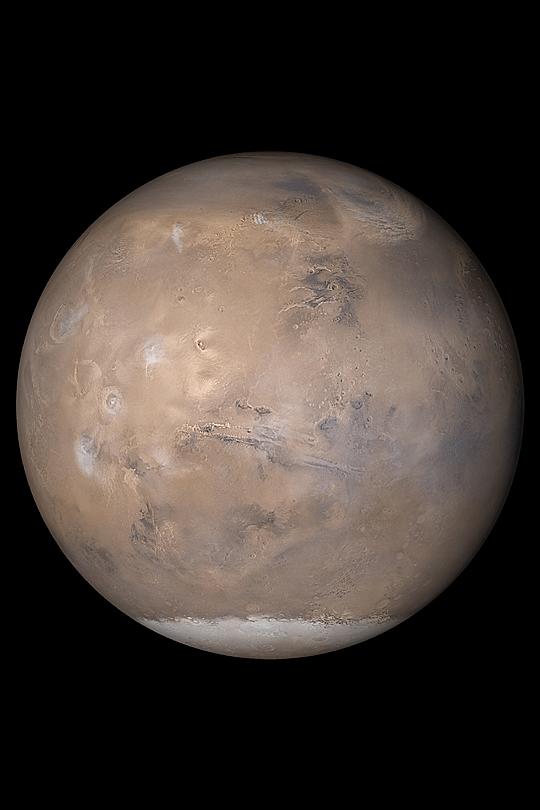
*Earth as seen from space, showing its blue oceans, white clouds, and continents. Credit: NASA (Public Domain)*Introduction
From space, Earth appears as a brilliant blue and white marble—the blue of oceans, the white of clouds and ice, the brown and green of continents. This view, first captured by Apollo astronauts, revealed Earth as a fragile oasis in the vast darkness of space. The "Pale Blue Dot" image taken by Voyager 1 from 6 billion kilometers away shows Earth as a tiny speck, a reminder of our planet's place in the cosmos.
Earth's uniqueness lies not in any single feature but in the combination of factors that make it habitable. Remove any one of these—the right distance from the Sun, the presence of water, a protective magnetic field, plate tectonics, or a stable atmosphere—and Earth would be as lifeless as Venus or Mars. This delicate balance has been maintained for billions of years, allowing life to arise, evolve, and flourish.
Understanding Earth is a work in progress. Despite being our home, many mysteries remain: How did life begin? What triggered the rise of oxygen in the atmosphere? How do plate tectonics work, and why does Earth have them when other planets don't? How will climate change affect the planet's habitability? These questions drive ongoing research in geology, biology, climate science, and planetary science.
Physical Characteristics
Basic Properties
Earth is the reference point for measuring other planets:
- Radius: 6,371 km (equatorial)
- Mass: 5.97 × 10²⁴ kg
- Density: 5.51 g/cm³ (highest of the terrestrial planets)
- Surface gravity: 9.81 m/s²
- Escape velocity: 11.2 km/s
Earth's high density indicates a large iron core, similar to Mercury but proportionally smaller.
Orbit and Rotation
Earth's orbit is nearly circular:
- Semi-major axis: 149.6 million km (1.0 AU, by definition)
- Orbital period: 365.26 days (1 year)
- Eccentricity: 0.017 (nearly circular)
- Rotation period: 23 hours, 56 minutes, 4 seconds (sidereal day)
- Axial tilt: 23.4° (creates seasons)
Earth's rotation is gradually slowing due to tidal interactions with the Moon, lengthening the day by approximately 1.7 milliseconds per century.
Internal Structure
Core
Earth has a two-part core:
- Inner core: Solid iron-nickel, radius ~1,220 km, temperature ~5,700 K
- Outer core: Liquid iron-nickel, thickness ~2,260 km, temperature ~4,000-5,000 K
The outer core's convection, combined with Earth's rotation, generates the magnetic field through a dynamo process.
Mantle
The mantle extends from the core-mantle boundary (2,890 km depth) to the crust:
- Thickness: ~2,900 km
- Composition: Silicate rocks rich in iron and magnesium
- State: Solid but capable of slow flow over geological time
- Temperature: 1,000 K at top, 3,700 K at bottom
Mantle convection drives plate tectonics, with hot material rising and cool material sinking in a process that has continued for billions of years.
Crust
Earth's crust is divided into:
- Oceanic crust: 5-10 km thick, primarily basalt, younger (average 100 million years)
- Continental crust: 30-50 km thick, primarily granite, older (up to 4 billion years)
The crust and uppermost mantle form the lithosphere, which is broken into tectonic plates that move relative to each other.
Plate Tectonics
The Engine of Geological Activity
Plate tectonics is Earth's defining geological process:
- Mechanism: Convection in the mantle drives plate motion
- Speed: Plates move 1-10 cm per year
- Boundaries: Divergent (spreading), convergent (colliding), transform (sliding)
Plate tectonics is unique to Earth among the terrestrial planets. Why Earth has it and others don't is not fully understood but may relate to:
- The presence of water, which lubricates plate boundaries
- The right balance of heat production and loss
- The composition and thickness of the lithosphere
Effects of Plate Tectonics
Plate tectonics has profound effects:
- Mountain building: Colliding plates create mountain ranges
- Volcanism: Occurs at plate boundaries and hot spots
- Earthquakes: Result from plate motion and interactions
- Nutrient recycling: Subduction returns surface material to the mantle
- Climate regulation: Volcanism and weathering regulate atmospheric CO₂
Without plate tectonics, Earth would be geologically dead, like the Moon or Mars, and life as we know it might not exist.
The Atmosphere
Composition and Structure
Earth's atmosphere is unique in the solar system:
- Nitrogen: 78.08% (inert, provides bulk)
- Oxygen: 20.95% (produced by life, enables complex life)
- Argon: 0.93%
- Carbon dioxide: 0.04% (traces, but crucial for climate)
- Water vapor: Variable (0-4%, crucial for weather)
The atmosphere is divided into layers:
- Troposphere (0-12 km): Where weather occurs, temperature decreases with altitude
- Stratosphere (12-50 km): Contains ozone layer, temperature increases with altitude
- Mesosphere (50-85 km): Temperature decreases again
- Thermosphere (85-600 km): Temperature increases, very thin
- Exosphere (>600 km): Gradual transition to space
The Greenhouse Effect
Earth's moderate greenhouse effect is essential for life:
- Without atmosphere: Average temperature would be -18°C
- With atmosphere: Average temperature is +15°C
- Difference: 33°C due to greenhouse effect
Key greenhouse gases:
- Water vapor (most important)
- Carbon dioxide
- Methane
- Nitrous oxide
The greenhouse effect keeps Earth warm enough for liquid water, but human activities are enhancing it, causing global warming.
Ozone Layer
The stratospheric ozone layer protects life from harmful UV radiation:
- Location: 15-35 km altitude
- Function: Absorbs 97-99% of solar UV-B and UV-C radiation
- Threat: Ozone-depleting substances (now largely controlled)
The discovery of the ozone hole in the 1980s led to the Montreal Protocol, demonstrating that international cooperation can address global environmental challenges.
The Hydrosphere
Oceans
Earth is the "Blue Planet" because of its oceans:
- Coverage: 71% of surface
- Volume: 1.332 billion km³
- Average depth: 3.7 km
- Deepest point: Mariana Trench, 11 km
The oceans:
- Regulate climate through heat storage and transport
- Support most of Earth's biodiversity
- Drive weather patterns through evaporation
- Absorb CO₂, moderating climate change
Water Cycle
The continuous movement of water drives Earth's climate:
- Evaporation: Sun heats ocean surface
- Transpiration: Plants release water vapor
- Condensation: Water vapor forms clouds
- Precipitation: Rain and snow return water to surface
- Runoff: Water flows back to oceans
This cycle distributes heat, nutrients, and water around the planet.
The Biosphere
Life's Impact on Earth
Life has fundamentally altered Earth:
- Oxygen production: Photosynthesis created the oxygen-rich atmosphere
- Soil formation: Life breaks down rock and creates soil
- Mineral formation: Many minerals are biogenic (formed by life)
- Climate regulation: Life influences the carbon cycle and albedo
The co-evolution of life and Earth is evident in:
- The Great Oxidation Event (~2.4 billion years ago)
- The rise of complex life (~600 million years ago)
- Mass extinctions and recoveries
- Human impacts on the planet
Biodiversity
Earth hosts an estimated 8.7 million species (though only ~1.2 million have been described):
- Terrestrial: Forests, grasslands, deserts, tundra
- Marine: Coral reefs, deep sea, polar regions
- Extremophiles: Life in extreme environments (hot springs, deep ocean, ice)
This diversity is threatened by human activities, with extinction rates 100-1,000 times higher than natural background rates.
Climate and Climate Change
Natural Climate Variability
Earth's climate has varied dramatically:
- Snowball Earth: Periods when most of the planet was frozen
- Warm periods: Times with no polar ice, like the Eocene (50 million years ago)
- Ice ages: Regular cycles of glaciation over the past 2.6 million years
Natural drivers include:
- Changes in Earth's orbit (Milankovitch cycles)
- Solar variability
- Volcanic activity
- Ocean circulation changes
Human-Induced Climate Change
Human activities are now the dominant driver of climate change:
- CO₂ increase: From 280 ppm (pre-industrial) to 420 ppm (2024)
- Temperature rise: ~1.1°C since 1880
- Effects: Melting ice, sea level rise, extreme weather, ecosystem changes
Addressing climate change is one of humanity's greatest challenges, requiring rapid transition away from fossil fuels and protection of natural carbon sinks.
Earth's Magnetic Field
The Protective Shield
Earth's magnetic field is generated by the dynamo in the liquid outer core:
- Strength: ~30,000-60,000 nT at surface
- Shape: Dipole field, like a bar magnet
- Protection: Deflects solar wind, preventing atmosphere loss
The magnetic field:
- Creates the magnetosphere, extending ~10 Earth radii on the sunward side
- Traps charged particles in Van Allen belts
- Enables auroras at the poles
- Provides navigation for many animals
Magnetic Field Reversals
Earth's magnetic field reverses polarity irregularly:
- Frequency: Every 200,000-300,000 years on average
- Last reversal: ~780,000 years ago
- Process: Takes 1,000-10,000 years
- Effects: During reversal, field weakens, increasing radiation exposure
We are currently overdue for a reversal, though the timing is unpredictable.
Geological History
Formation and Early Earth
Earth formed 4.6 billion years ago from the solar nebula:
- Accretion: Took ~10-20 million years
- Differentiation: Heavy elements sank to form core
- Moon formation: Giant impact ~4.5 billion years ago
- Late Heavy Bombardment: Intense asteroid impacts ~4.0-3.8 billion years ago
Major Geological Eras
Hadean (4.6-4.0 billion years ago):
- Formation, differentiation, Moon-forming impact
- No preserved rocks (too hot, too active)
Archean (4.0-2.5 billion years ago):
- First life appears (~3.8 billion years ago)
- Continents begin forming
- Atmosphere oxygen-poor
Proterozoic (2.5 billion-541 million years ago):
- Great Oxidation Event (~2.4 billion years ago)
- Complex life evolves
- Multiple Snowball Earth episodes
Phanerozoic (541 million years ago-present):
- Explosion of complex life
- Formation and breakup of supercontinents
- Five major mass extinctions
- Rise of humans
Earth in the Solar System Context
The Habitable Zone
Earth orbits in the Sun's habitable zone—the region where liquid water can exist:
- Inner edge: ~0.95 AU (Venus is too close)
- Outer edge: ~1.37 AU (Mars is near the edge)
- Earth's position: 1.0 AU (optimal)
As the Sun ages and brightens, the habitable zone moves outward. In ~1 billion years, Earth may become too hot for life.
Comparison to Other Planets
Earth is unique among known planets:
- Only planet with confirmed life
- Only planet with plate tectonics (among terrestrial planets)
- Only planet with abundant liquid water on the surface
- Only planet with an oxygen-rich atmosphere (produced by life)
Understanding why Earth is habitable helps us search for life elsewhere and recognize potentially habitable exoplanets.
Future of Earth
Natural Evolution
Over the next billions of years:
- Sun brightening: Will gradually increase Earth's temperature
- Plate tectonics: Will continue until Earth's interior cools
- Magnetic field: Will weaken as the core solidifies
- Final state: Earth will become uninhabitable, then be consumed when the Sun becomes a red giant
Human Impacts
Human activities are causing rapid changes:
- Climate change: Warming, sea level rise, extreme weather
- Biodiversity loss: Sixth mass extinction underway
- Pollution: Air, water, and soil contamination
- Resource depletion: Overuse of finite resources
Addressing these challenges requires:
- Rapid transition to renewable energy
- Protection and restoration of ecosystems
- Sustainable resource use
- International cooperation
Conclusion
Earth is a remarkable world—the only known planet with life, a product of 4.6 billion years of evolution, and home to all of humanity. Its habitability arises from a unique combination of factors: the right distance from the Sun, liquid water, a protective magnetic field, plate tectonics, and a stable atmosphere. Understanding Earth is essential for understanding our place in the universe, protecting our planet's future, and searching for life elsewhere. As we face unprecedented challenges from climate change and environmental degradation, Earth's history shows that the planet can recover from dramatic changes—but the timescales are geological, not human. Our responsibility is to ensure that human activities don't push Earth beyond its capacity to support life as we know it.
For related topics:
- Moon - Earth's natural satellite
- Mars - The Red Planet and potential future home
- Venus - Earth's twin planet
- Sun - Our star and the source of Earth's energy
- Planetary Science & Space - Overview of planetary science topics
^[NASA Earth Observatory] NASA. (2024). Earth Observatory. https://earthobservatory.nasa.gov/
^[USGS Earth Science] USGS. (2024). Earth Science. U.S. Geological Survey. https://www.usgs.gov/natural-hazards/earthquake-hazards/science
^[IPCC Climate Change] IPCC. (2023). Climate Change 2023: Synthesis Report. Intergovernmental Panel on Climate Change. https://www.ipcc.ch/report/ar6/syr/
^[Plate Tectonics] Fowler, C. M. R. (2005). The Solid Earth: An Introduction to Global Geophysics (2nd ed.). Cambridge University Press.
^[Earth's Magnetic Field] Merrill, R. T., et al. (1998). The Magnetic Field of the Earth: Paleomagnetism, the Core, and the Deep Mantle. Academic Press.
^[Great Oxidation Event] Lyons, T. W., et al. (2014). The rise of oxygen in Earth's early ocean and atmosphere. Nature, 506(7488), 307-315.
^[Biodiversity] Wilson, E. O. (2016). Half-Earth: Our Planet's Fight for Life. Liveright Publishing.
^[Climate Change] Hansen, J., et al. (2013). Assessing "dangerous climate change": Required reduction of carbon emissions to protect young people, future generations and nature. PLOS ONE, 8(12), e81648.
Recommended Reading
For readers interested in learning more about Earth and planetary science, the following books provide excellent coverage:
-
Langmuir, C. H., & Broecker, W. S. (2012). How to Build a Habitable Planet: The Story of Earth from the Big Bang to Humankind. Princeton University Press. ISBN: 978-0691140063 - Comprehensive exploration of how Earth became habitable and the processes that shaped our planet.
-
Hazen, R. M. (2012). The Story of Earth: The First 4.5 Billion Years, from Stardust to Living Planet. Penguin Books. ISBN: 978-0143123644 - Engaging narrative of Earth's geological and biological evolution.
-
Ward, P. D., & Brownlee, D. (2003). The Life and Death of Planet Earth: How the New Science of Astrobiology Charts the Ultimate Fate of Our World. Times Books. ISBN: 978-0805075120 - Exploration of Earth's future and the factors that make planets habitable.