STEM
I have had a life long interest in science and technology, electronics and the starts of an STM machine at home, inspired by amateur science blogs and the Forrest Mims books. I studied physics & planetary science as an undergraduate, where I had the chance to help build detector chips for the ATLAS project at CERN, worked on the Hubble Deep Field, and participated in some remote sensing projects on Mars in a graduate seminar. During high school, I volunteered working at the Exploratorium in their machine shop - and this drove in the love of teaching and approaching things with curiosity and an open mind.
This section explores the major branches of science, technology, and engineering. Each area has its own overview page where you can dive deeper into specific topics.
Mathematics & Computer Science
My journey into mathematics began with "Mathematics and the Imagination" by Edward Kasner and James Newman—a book that opened my eyes to the beauty and wonder of mathematical thinking. This foundational experience shaped my appreciation for the abstract structures that underlie both mathematics and computer science.
Mathematics - Explore mathematical concepts, tools, and learning resources. From discrete mathematics to computational theory, mathematics provides the language and framework for understanding the world.
Computer Science - Dive into the theoretical foundations of computation. This section covers the mathematical models that define what can be computed and how efficiently. Computer science bridges the gap between abstract mathematics and practical computation, exploring questions like: What problems can be solved? How efficiently? What are the fundamental limits of computation?
The relationship between mathematics and computer science is deep and fundamental—computer science is a branch of mathematics, focused on information, computation, and algorithms. Computer programming and coding, on the other hand, are the industrial art of implementing these mathematical concepts—a different but equally important discipline. Understanding this distinction enriches both fields.
Core Disciplines
Physics
Physics is the fundamental science that seeks to understand the nature of matter, energy, space, and time. From condensed matter physics to nuclear physics and astrophysics, physics provides the theoretical framework for understanding the universe.
Planetary Science & Space
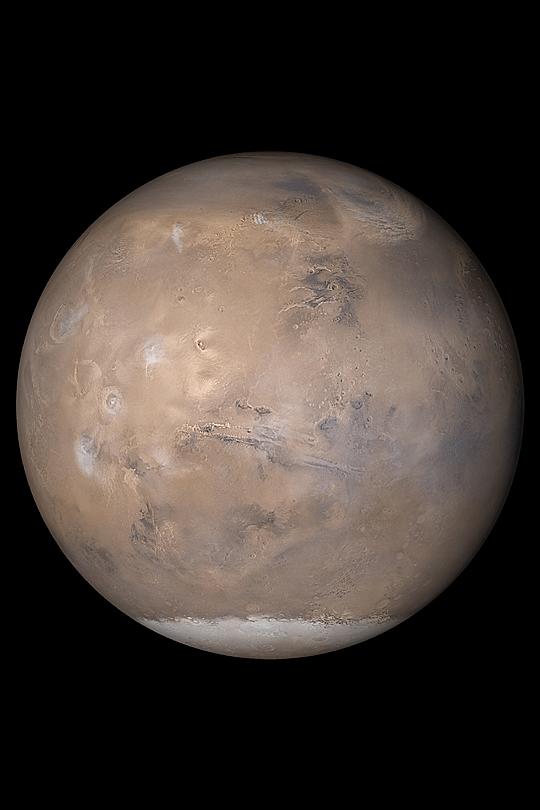
Planetary Science & Space explores our solar system and beyond, from the planets and moons in our cosmic neighborhood to the broader questions of space exploration and the search for life.
Quantum Computing
Quantum Computing represents a fundamental shift in computation, leveraging quantum mechanics to solve problems that are intractable for classical computers.
Statistical Mechanics
Statistical Mechanics bridges the microscopic world of atoms and molecules to the macroscopic world we observe, explaining how collective behavior emerges from individual particle interactions.
Engineering & Technology
Engineering - Electronics projects and hands-on learning, inspired by Forrest Mims' approach to practical education through experimentation.
Business, Economics & Innovation
The intersection of technology, business, and economics. I run an AI and Software consulting company Technigami and enjoy following developments in business, economics, and innovation.
- Economics & Innovation - Overview of business, economics, and innovation topics
- Business - Entrepreneurship, consulting, and business insights