Moiré Materials
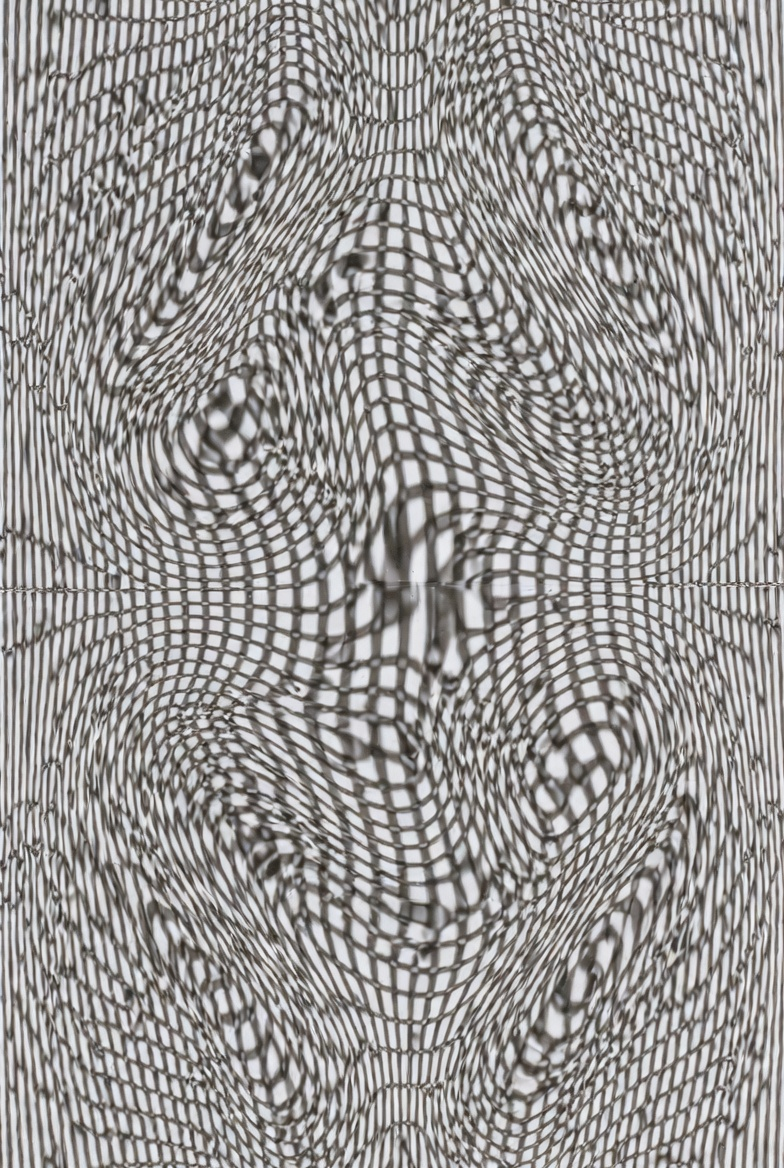
Moiré materials represent one of the most exciting frontiers in condensed matter physics and materials science. These structures are created by stacking two-dimensional (2D) materials with a slight twist or lattice mismatch, resulting in periodic interference patterns known as moiré patterns. These patterns dramatically alter the electronic, optical, and mechanical properties of the materials, leading to novel quantum phenomena and potential applications in electronics, photonics, and quantum computing.
What Are Moiré Materials?
Moiré materials are formed when two atomically thin layers are stacked with a small relative rotation or when layers with slightly different lattice constants are overlaid. The resulting moiré pattern creates a new periodic structure with a much larger unit cell than the individual layers, leading to emergent properties that don't exist in either layer alone.
The most famous example is twisted bilayer graphene (TBG), where two sheets of graphene are rotated relative to each other by a small angle (typically 1-2 degrees). At specific "magic angles," the electronic structure becomes dramatically different, enabling phenomena like superconductivity, correlated insulating states, and topological phases.
Key Concepts
Magic Angles
At specific twist angles (most notably ~1.1° for bilayer graphene), the moiré pattern creates flat electronic bands where electrons move very slowly. This enhances electron-electron interactions, leading to strongly correlated electronic states. The discovery of superconductivity in magic-angle twisted bilayer graphene was a breakthrough that opened new avenues for understanding high-temperature superconductivity.
Moiré Potential
The moiré pattern creates a periodic potential landscape that modulates the electronic properties. This potential can trap electrons, create minibands, and dramatically alter the density of states. The strength and periodicity of this potential depend on the twist angle and the materials involved.
Flat Bands
One of the most important consequences of moiré patterns is the creation of flat electronic bands—regions of the electronic structure where the energy barely changes with momentum. These flat bands enhance electron correlations and are responsible for many of the exotic phenomena observed in moiré materials.
Properties and Phenomena
Electronic Properties
Moiré materials exhibit a rich variety of electronic behaviors:
- Superconductivity: Twisted bilayer graphene shows superconductivity at temperatures up to a few Kelvin, with the critical temperature tunable by the twist angle and carrier density.
- Correlated Insulating States: At certain fillings, the material becomes an insulator despite being made of conducting graphene layers.
- Topological Phases: Some moiré materials host topological states with protected edge modes.
- Fractional Quantum Hall Effects: In certain configurations, fractional quantum Hall states can emerge.
Optical Properties
The moiré pattern affects how these materials interact with light:
- Tunable Absorption: The optical absorption can be controlled by adjusting the twist angle.
- Excitonic Effects: The periodic potential can trap excitons (electron-hole pairs), leading to novel optical properties.
- Photoluminescence: Some moiré materials show enhanced or tunable photoluminescence.
Mechanical Properties
The mechanical response of moiré materials can be tailored:
- Strain Engineering: The moiré pattern can be modified by applying strain, providing another tuning parameter.
- Elastic Properties: The interlayer interactions in moiré structures affect the overall mechanical properties.
Materials Systems
Beyond twisted bilayer graphene, moiré patterns have been studied in various material combinations:
- Twisted Bilayer Graphene (TBG): The most studied system, showing superconductivity and correlated states.
- Twisted Trilayer Graphene: Additional layers add complexity and new phases.
- Graphene on Hexagonal Boron Nitride (hBN): Creates a moiré superlattice with different properties.
- Transition Metal Dichalcogenides (TMDs): Materials like MoS₂, WSe₂, and their heterostructures.
- Twisted Bilayer WSe₂: Shows moiré excitons and correlated states.
Applications
Moiré materials hold promise for various applications:
- Quantum Computing: The tunable correlated states could serve as qubits or quantum simulators.
- Electronics: Field-effect transistors and other devices with tunable properties.
- Optoelectronics: Photodetectors and light-emitting devices with controllable properties.
- Sensors: Highly sensitive sensors exploiting the tunable electronic properties.
- Energy Storage: Potential applications in batteries and supercapacitors.
Scientific Papers and References
Foundational Papers
-
Cao, Y., et al. (2018). "Unconventional superconductivity in magic-angle graphene superlattices." Nature, 556(7699), 43-50. DOI: 10.1038/nature26160
- The breakthrough paper reporting superconductivity in magic-angle twisted bilayer graphene.
-
Cao, Y., et al. (2018). "Correlated insulator behaviour at half-filling in magic-angle graphene superlattices." Nature, 556(7699), 80-84. DOI: 10.1038/nature26154
- Discovery of correlated insulating states in twisted bilayer graphene.
-
Bistritzer, R., & MacDonald, A. H. (2011). "Moiré bands in twisted double-layer graphene." Proceedings of the National Academy of Sciences, 108(30), 12233-12237. DOI: 10.1073/pnas.1108174108
- Theoretical prediction of flat bands in twisted bilayer graphene.
Review Articles
-
Andrei, E. Y., et al. (2021). "The marvels of moiré materials." Nature Reviews Materials, 6(3), 201-206. DOI: 10.1038/s41578-021-00284-1
- Comprehensive review of moiré materials and their properties.
-
Kennes, D. M., et al. (2021). "Moiré heterostructures as a condensed-matter quantum simulator." Nature Physics, 17(2), 155-163. DOI: 10.1038/s41567-020-01154-3
- Discussion of moiré materials as quantum simulators.
-
Carr, S., et al. (2020). "Twistronics: Manipulating the electronic properties of two-dimensional layered structures through their twist angle." Physical Review B, 101(7), 075409. DOI: 10.1103/PhysRevB.101.075409
- Review of twistronics and electronic property manipulation.
Recent Advances
-
Park, J. M., et al. (2021). "Tunable strongly coupled superconductivity in magic-angle twisted trilayer graphene." Nature, 590(7845), 249-255. DOI: 10.1038/s41586-021-03192-0
- Superconductivity in twisted trilayer graphene.
-
Sharpe, A. L., et al. (2019). "Emergent ferromagnetism near three-quarters filling in twisted bilayer graphene." Science, 365(6453), 605-608. DOI: 10.1126/science.aaw3780
- Discovery of ferromagnetism in twisted bilayer graphene.
-
Serlin, M., et al. (2020). "Intrinsic quantized anomalous Hall effect in a moiré heterostructure." Science, 367(6480), 900-903. DOI: 10.1126/science.aay5533
- Quantized anomalous Hall effect in moiré materials.
-
Regan, E. C., et al. (2020). "Mott and generalized Wigner crystal states in WSe₂/WS₂ moiré superlattices." Nature, 579(7799), 359-363. DOI: 10.1038/s41586-020-2092-4
- Correlated states in TMD moiré superlattices.
Theory and Modeling
-
Tarnopolsky, G., et al. (2019). "Origin of magic angles in twisted bilayer graphene." Physical Review Letters, 122(10), 106405. DOI: 10.1103/PhysRevLett.122.106405
- Theoretical explanation of magic angles.
-
Song, Z., et al. (2019). "All magic angles in twisted bilayer graphene are topological." Physical Review Letters, 123(3), 036401. DOI: 10.1103/PhysRevLett.123.036401
- Topological nature of magic angles.
Books
-
Amidror, I. (2009). The Theory of the Moiré Phenomenon: Volume I: Periodic Layers (2nd ed.). Springer. ISBN: 978-1-84882-180-4
- Comprehensive mathematical treatment of moiré patterns and their theory.
-
Amidror, I. (2009). The Theory of the Moiré Phenomenon: Volume II: Aperiodic Layers (2nd ed.). Springer. ISBN: 978-1-84882-181-1
- Advanced treatment of aperiodic moiré patterns.
-
Geim, A. K., & Novoselov, K. S. (2010). "The rise of graphene." In Nanoscience and Technology: A Collection of Reviews from Nature Journals (pp. 11-19). World Scientific. DOI: 10.1142/9789814287005_0002
- Foundational work on graphene, the building block of many moiré materials.
Online Resources
- Yale Scientific Magazine: Moiré Materials - Accessible overview article
- Nature Reviews Materials: Moiré Materials Collection - Collection of review articles
- EPFL Moiré Theory: Selected Figures from The Theory of the Moiré Phenomenon - Visual demonstrations of moiré patterns
Related Topics
- Meta Materials - Engineered materials with properties not found in nature
- Material Science - Material science overview and fundamentals
- Spin Glasses - Disordered magnetic systems with complex energy landscapes
- Statistical Mechanics - Statistical approaches to understanding physical systems
- Quantum Computing - Quantum computing and quantum mechanics
Future Directions
Research in moiré materials is rapidly advancing, with ongoing work on:
- Higher-order moiré patterns: Stacking more than two layers
- Heterostructures: Combining different 2D materials
- Strain engineering: Using mechanical strain to tune properties
- Device applications: Developing practical devices based on moiré materials
- Quantum simulation: Using moiré materials to simulate complex quantum systems
The field of moiré materials continues to reveal new physics and potential applications, making it one of the most active areas of research in condensed matter physics today.
